
Type of project
Furniture Design
Course
Design Meets Industry
My role
Research & Analysis
Ideation & Concept
Design Thinking
Scale Modeling
3D rendering
1:1 Prototyping
Software
Rhino 3D
KeyShot
AutoCAD 2D
Adobe Photoshop
Adobe Illustrator
Adobe InDesign
MOMO
A Tribute to Småland
Momo is a design project that explores how a piece of furniture can enhance a company's identity by drawing on local heritage and cultural values. The challenge was to design a seating furniture that embodies the values and identity of Stolab while offering a timeless piece that enhances social participation across generations.
By drawing inspiration from Stolab’s furniture design language and local history, I have created a piece of furniture that connects to traditional craftsmanship from Småland and aligns with the company’s vision of timelessness, functionality, and sustainability.

About Stolab
Founded in 1907, Stolab has deep roots in Småland, where tradition and craftsmanship take center stage. Stolab can proudly say that they have produced some of Sweden’s most iconic design classics, including the Lilla Åland chair. Designed by Carl Malmsten in 1942, Lilla Åland remains a proud example of timeless design and continues to be manufactured in the factory to this day.
This project is based on the furniture company’s core values: in-house Swedish production, solid wood, environmental responsibility, conscious simplicity, and the harmony of form and function. This project delves into how these values can be embodied in a new piece of seating furniture with a contemporary expression.
Problem Statement
How might I design a piece of seating furniture that strengthens Stolab’s identity while fostering connection across generations, so that it feels both timeless and relevant in today’s homes and public spaces?
Understanding Stolab
To ensure that my design would authentically reflect Stolab’s identity, I began by immersing myself in the company's design ethos and heritage. Understanding how Stolab communicates through form, material, and narrative was essential in designing a piece that would feel like a natural extension of their collection.

Stolab’s design language
Through my research, I found that Stolab’s design language is defined by clarity, softness, and humility. Their furniture combines simple forms, rounded edges, clean lines, and honest materials, with a strong presence achieved through solid wood construction. The natural materials and refined details give each piece a quiet elegance. The result is furniture that is adaptable yet distinctive, designed to last across both time
and trends.
Stolab’s core values
-
In-house Swedish Production
-
Solid Wood
-
Environmental Responsibility
-
Conscious Simplicity
-
Harmony Between Form and Function
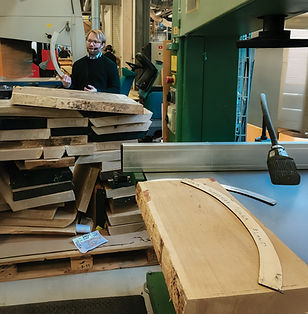


Study visit to Stolab's furniture factory in Småland

A company in the heart of Småland
Stolab’s design philosophy is deeply intertwined with the identity of Småland, a region shaped by, hard working -, humble people and quality craft. Since its founding in 1907, the company has embodied the values of its landscape and people: simplicity, resourcefulness, and deep respect for materials.
Småland identity
-
Hard-working
-
Economically minded
-
Humble
-
Entrepreneurial spirit
-
Resilience
-
Craftsmanship
-
Independent
-
Honest
Form words
-
Strong
-
Simplicity
-
Reliable
-
Proud
-
Natural
-
Humble
-
Quality
Main environments of use
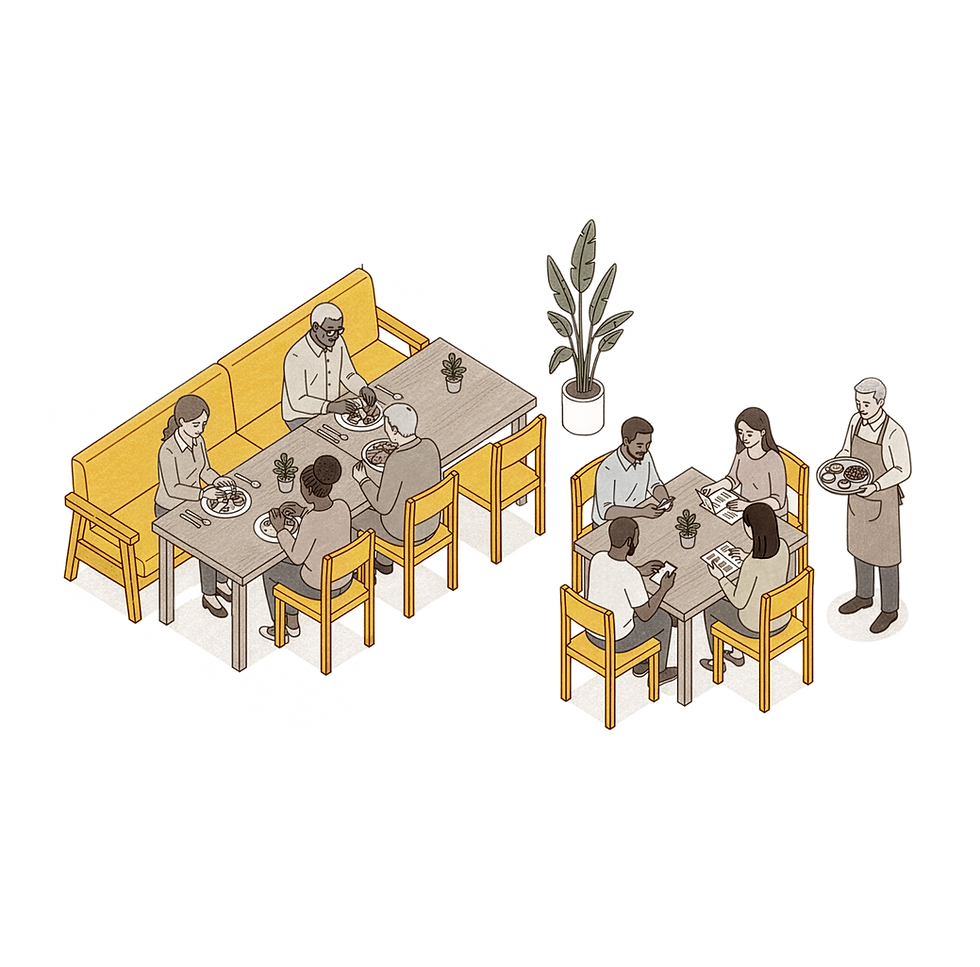
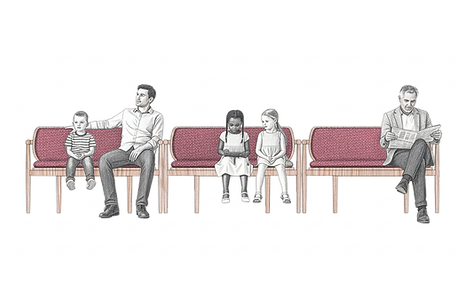
Stolab’s seating furniture must meet the demands of diverse environments. In homes, comfort and personal style are often key. In public spaces such as waiting areas, restaurants, durability, easy maintenance, space efficiency and functionality are strong factors.


The opportunity
During my analysis of Stolab’s seating collection and its real-world use, I identified a gap in their product range. In settings like restaurants, lobbies, and homes, kitchen (bistro) sofas from other brands were often used alongside Stolab’s pieces. With their only multi-person dining seating bench soon to be discontinued, this presented an opportunity to design a new piece that could seamlessly extend Stolab’s collection.
Ideating
The goal was to create a sofa that reflects the generations who helped shape the Stolab and Småland identity: strength and pride, while also expressing simplicity and humility. The aim of the design was to achieve a form that communicates clarity and harmony between form and function, where the natural character of the wood takes center stage and the values of Småland’s strong craftsmanship tradition are clearly represented.

Early sketches and scale models

Full-size mock-ups

In developing the sofa, the process began with quick sketches that made it possible to rapidly capture and explore ideas visually. Small three-dimensional models then provided a clearer overall understanding of the form. Through a full-scale mock-up in cardboard and MDF, ergonomics, dimensions and construction could be tested in real scale.

Sketches and final small-scale models

Finalizing the design in 3D software
Momo
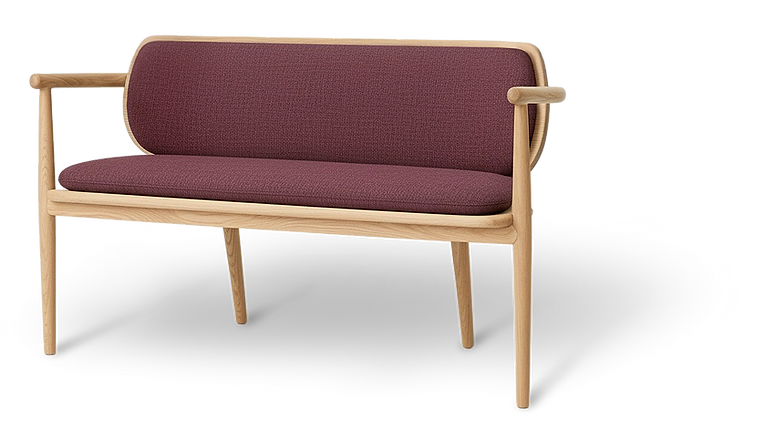
Rooted in Stolab’s Småland heritage, The Momo sofa was created as a tribute to the people and traditions that have shaped the region’s identity. Drawing from this legacy, the design honors craftsmanship, humbleness, and the spirit of resilience while meeting the needs of today’s diverse environments.


Plow with curved wooden ridge, Småland 19th century
The sofas design carries a story from the region: the strong backrest reflects the perseverance of Småland’s peoples backs through historically hard times, while the curved rear construction, linking armrest to back leg, draws inspiration from traditional farming tools uses in the Småland fields.
The name MOMO comes from the Småland dialect word for “grandmother,” symbolizing continuity, and respect for intergenerational ties.



"During her time at the department, I witnessed how Ami developed as a designer with a particular interest in the cultural and societal issues so closely related to the design practice. This is visible in the larger design project she took part in during her studies – ”Design meets industry” with Stolab as a collaborative partner.
Her approach and process reveal an understanding of a brand’s need for cultural and social values. Ami developed her ideas through sketching, model-making and research in a iterative manner, and presented a clear and sharp concept on an updated kitchen sofa for Stolab.
She proved also to possess not only professional and artistic skills in design, but an intellectual approach to the subject as well. "
Rasmus Malbert (1979–2021)
Senior Lecturer / Program Director, Wood Oriented Furniture Design
Later: Lecturer in Design at HDK-Valand and Jury Member of Ung Svensk Form
